Flagstaff & Coconino County · Winter guide, November 2026
Frozen pipes in Flagstaff winters
As of November 2026, Flagstaff winters average lows around 20°F with about 108 inches of snow, the City sets the frost line at 30 inches, and a pipe outside the heated envelope can freeze within hours once the air drops below 32°F. A burst or frozen pipe repair here runs $200 – $4,000+ according to a Flagstaff plumber's published pricing. This page covers how to keep it from happening, how to shut a cabin down for the season, and how to thaw a line without splitting it.
Serving Flagstaff, Arizona.
The short answer
Water expands as it freezes. In a closed pipe with nowhere to go, that expansion splits the wall of the pipe — and the leak shows up when the ice thaws, often in more than one place along the same run. In Flagstaff the conditions for that are routine, not exceptional: average winter lows around 20°F, roughly 108 inches of snow a year, and a town at about 7,000 feet where the City's own building design criteria put the frost line at 30 inches and the winter design temperature at 4°F.
Three things prevent most burst pipes here: keep water lines inside the heated envelope or insulated if they cannot be, keep water moving and cabinets open on the coldest nights, and shut off and drain any home that will sit empty. The rest of this page is the detail behind each, followed by a safe thawing sequence for the night it happens anyway.
If a pipe has already split, skip to the leak page's five-step shut-off sequence — water first, reading second.
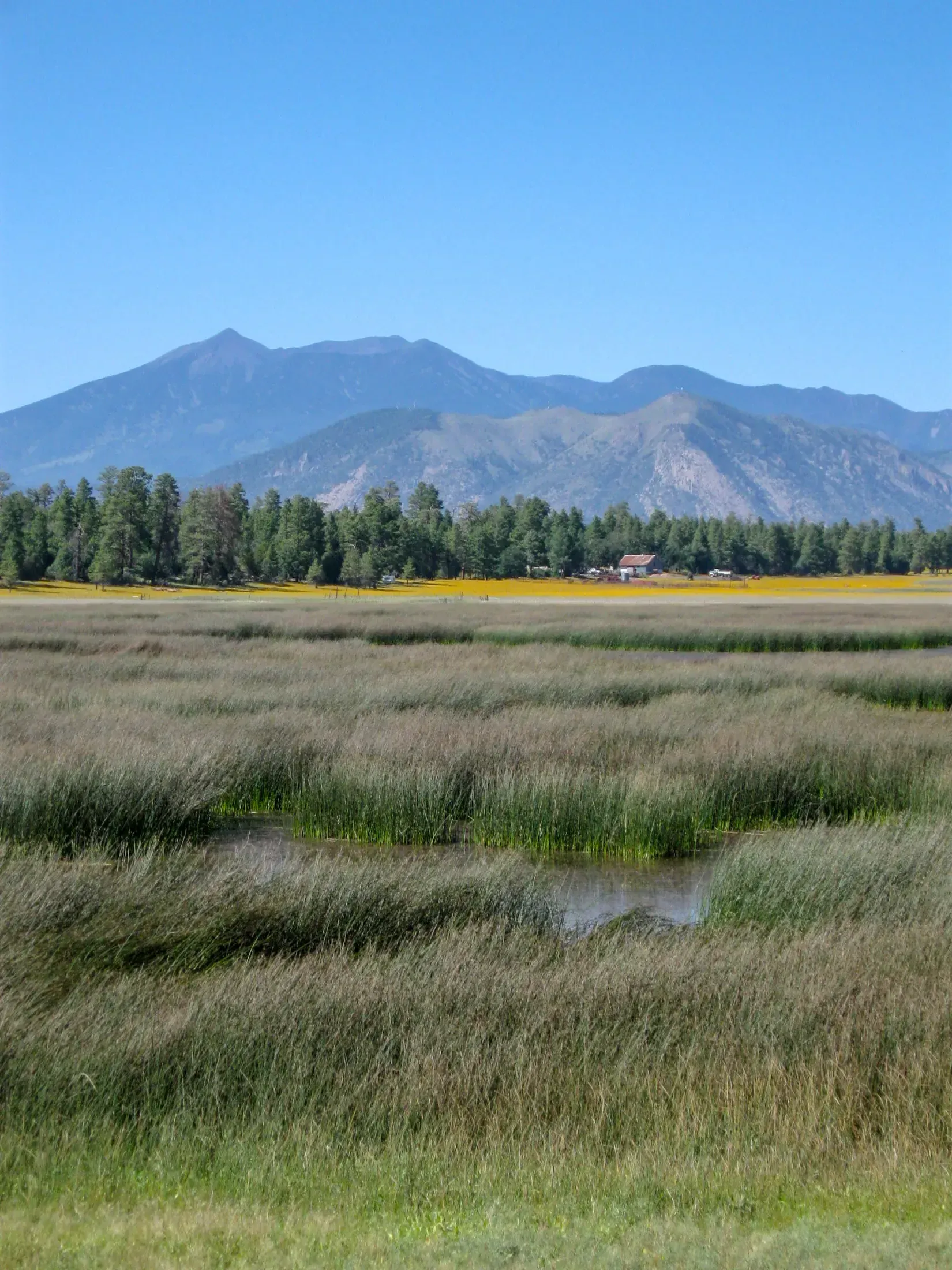
Why Flagstaff freezes pipes that Phoenix never would
The same State, two different climates. A Phoenix home is built for ground that does not freeze. A Flagstaff home is built to the City of Flagstaff's design criteria for one- and two-family dwellings, which set the frost line depth at 30 inches and the winter design temperature at 4°F. Those are the numbers the building code uses to size footings and heating — evidence of how deep the ground freezes and how cold a design night is, not a weather forecast — and they are why the City amends the plumbing code to require exterior water supply piping to be buried at least thirty inches below grade (the permit guide covers that amendment).
Buried line at that depth is protected. The problem is everything above it. Any water line that runs through unheated space — a crawl space, a garage, an attic, an exterior wall, a hose bib — sees the outside air, and in Flagstaff the outside air averages a 20°F low through the winter months, with a 49°F average high that does not thaw a crawl space. Pipes can begin freezing once the air around them falls below 32°F if they are exposed or poorly insulated, and a Flagstaff plumber's own frozen-pipe guide notes that a line with no water moving through it can freeze within a few hours during a hard cold snap.
Add 108 inches of average annual snowfall and you get the second Flagstaff-specific failure: snow piled against a foundation vent or a hose bib, holding cold against the pipe behind it for weeks.
Where Flagstaff pipes freeze
- Crawl spaces — the most common spot in older Flagstaff housing stock. Open or missing foundation vents and uninsulated runs are the usual story.
- Garages — a water heater, a laundry hookup, or a line to a hose bib on the far wall, in a space that is only as warm as the door left open.
- Attics — supply lines routed through an unheated attic to reach a second-floor bathroom or a remote fixture.
- Exterior walls — kitchen and bathroom sinks on an outside wall, where the pipe sits between the drywall and the cold with little insulation between.
- Hose bibs and the service entry — the outside faucet with a hose still attached, and the main line where it comes through the foundation.
Who it happens to most: seasonal homes. Flagstaff, Munds Park, and the surrounding unincorporated communities carry a large stock of cabins and second homes that sit empty for weeks at a time in winter. An unheated house with the water left on is the single most common burst-pipe story in the area — and because no one is home, the split is not found until the thaw, after the water has run for days.
Before the first hard freeze
The American Red Cross publishes a frozen-pipe fact sheet that most plumbers' advice is built on. Its before-winter list, applied to a Flagstaff house:
- Disconnect, drain, and store every outdoor hose. A hose left on a bib traps water in the faucet body, which is exactly where it freezes.
- Close the inside shut-off to each hose bib, then open the outside faucet and leave it open, so any water left in the pipe can expand without breaking it. Not every Flagstaff home has a separate interior valve for its hose bibs — if yours does not, a frost-free hose bib or an added shut-off is a small plumbing job worth having done before winter rather than after.
- Drain sprinkler and irrigation supply lines following the installer's directions, and do not put antifreeze in them unless directed.
- Insulate both hot and cold lines in the crawl space, attic, garage, and under sinks on exterior walls. A hot line freezes too once the water in it stops moving. Foam pipe sleeves are the simple option; UL-listed heat tape or heat cable is the option for a run that freezes every year, installed and wrapped to the manufacturer's instructions with the joints taped.
- Close foundation vents and seal gaps where cold air reaches the crawl space, and keep snow cleared from vents and hose bibs through the winter.
- Know where the main shut-off is before you need it. In Flagstaff homes it is usually where the supply enters the house — utility room, garage, or crawl space — or at the meter box near the street.
During a cold snap
- Keep the garage door closed if there are water lines in the garage.
- Open kitchen and bathroom cabinet doors on exterior walls so warm room air reaches the plumbing. Move cleaners and chemicals out of reach of children first.
- Let cold water drip from any faucet served by an exposed pipe. Moving water resists freezing; the water bill for a week of dripping is small next to a $200 – $4,000+ repair.
- Hold the thermostat at one temperature day and night rather than setting it back overnight. The Red Cross notes it may cost a little more in heat; it is cheaper than the alternative.
- Check the usual spots each morning. Run the faucets on exterior walls and in the garage. A trickle is the early warning.
Leaving for the winter: the cabin shut-down
If the house will be heated while you are away, the Red Cross figure is no lower than 55°F, held steady. For a cabin or second home that will sit empty for weeks — the Munds Park and Doney Park pattern — the safer sequence is to take the water out of the equation entirely:
- Shut the main off at the house or the meter.
- Open every faucet, hot and cold, and the lowest hose bib, and let the lines drain.
- Flush the toilets and leave the tanks empty.
- Set the water heater to vacation or off (gas) or switch off its breaker (electric). If the home will be unheated for the season, have the heater drained as well.
- Pour RV antifreeze — not automotive antifreeze — into every trap: sinks, tubs, showers, floor drains, and toilet bowls. That is the Pinewood Sanitary District's own winterization guidance for Munds Park, and it holds for any home on a community sewer or a septic system.
- Leave cabinet doors open and, if the home is on a well or a pressure tank, follow the pump installer's drain-down procedure.
Many Flagstaff plumbing companies offer this as a seasonal winterization service. This site does not publish a price for it, because no Flagstaff source has published one — ask the matched company to quote it as a line item, and ask whether the spring re-start is included.
If a pipe freezes: how to thaw it without bursting it
A frozen pipe that has not yet split is a problem you can usually solve yourself in an hour. The sequence below is the Red Cross's method, with the Flagstaff-specific places to look.
- Confirm it is a freeze, not a shut valve. Open the affected faucet. A trickle or nothing at all on a sub-freezing morning, with other faucets working, points to a frozen section. Check the main and any fixture stop first so you are not thawing a pipe that is simply turned off.
- Leave that faucet open. Keep the faucet open the whole time you work. As the ice melts, moving water helps clear the rest of the blockage, and an open outlet gives expanding water somewhere to go instead of splitting the pipe.
- Find the frozen run. Start where pipe meets cold: the crawl space, the garage, an exterior wall, under a sink on an outside wall, or where the service line comes through the foundation. Frost on the pipe, a bulge, or a section that is noticeably colder than the rest gives it away.
- Warm it from the faucet end back toward the freeze. Use an electric heating pad wrapped around the pipe, a hair dryer, a portable space heater kept well away from anything flammable, or towels soaked in hot water. Work from the open faucet toward the blockage so melting water can escape ahead of the ice.
- Never use an open flame. No blowtorch, propane or kerosene heater, charcoal stove, or any open-flame device. A torch can boil the water trapped behind the ice and burst the pipe, and open flame in a crawl space is a fire and carbon-monoxide risk.
- Keep going until full pressure returns, then check the other faucets. Apply heat until the faucet runs at normal pressure. If one pipe froze, others on the same cold side of the house may have too. Run every faucet and look at every exposed run before calling it done.
- Call a licensed plumber when you cannot find or reach it. If the frozen section is inside a wall, under the slab, somewhere you cannot get heat to, or if it will not thaw, that is the point to stop. The same is true the moment you see water — a split pipe needs a repair, not a thaw.
Keep the faucet open throughout. The single most common thawing mistake is closing it because "nothing is coming out" — which removes the only outlet the expanding water has.
If it has already burst
Stop reading and shut the water off at the main. The leak page walks through the five-minute sequence — main off, water heater off, power off in any wet area, a low faucet open to drain pressure, photographs before cleanup. Then get a licensed plumber matched. A Flagstaff plumber publishes $200 – $4,000+ for burst or frozen pipe repair depending on damage; the Arizona figure for an accessible leak repair is $155 – $1,550. Expect two bills — the plumbing repair and the water-damage restoration are almost never the same company — and expect one freeze to have split the line in more than one place.
Most homeowner policies treat a sudden burst as covered and a slow leak left unattended as not, and a vacant home left unheated with the water on is the case insurers scrutinize most. Photograph everything with timestamps, call the carrier early, and keep the plumber's written diagnosis. That is general information, not insurance advice.
What a plumber can do that a space heater cannot
If the same line freezes every winter, the fix is permanent rather than seasonal. The jobs a licensed Flagstaff plumber will typically propose, roughly in order of cost:
- Frost-free hose bibs and interior shut-offs for every outside faucet, so the valve seat sits inside the heated wall.
- Heat cable and insulation on a run that cannot be moved — a crawl-space main or a garage line — on its own circuit, installed to the listing.
- Rerouting the line out of the exterior wall or attic and into conditioned space. This is the fix for the sink on the outside wall that freezes every January.
- Repiping a section in PEX, which tolerates a freeze better than rigid copper, though no pipe material is freeze-proof and the fittings remain the weak point.
- A whole-house shut-off and drain-down arrangement for a seasonal cabin, so closing the house for the winter is a ten-minute job instead of a gamble.
Permits follow the work, not the weather. The City of Flagstaff's published exemptions cover stopping or repairing a leak in exposed pipe; removing and replacing concealed pipe, rerouting a line, or repiping is permitted work, and the 30-inch burial rule applies to any exterior supply line that gets replaced. The permit guide lists the exemptions and the city-versus-county split; the licensed company doing the work pulls the permit. Before any of it, check the company's Arizona ROC license — it takes about two minutes.
Sources and what this page does not claim
- Winter temperatures (average high 49°F, low 20°F) and 108.8-inch average annual snowfall: Discover Flagstaff, as carried on this site's leak and service-area pages. Elevation of roughly 7,000 feet: the same source.
- Frost line depth 30 inches and winter design temperature 4°F: City of Flagstaff Building Safety "Building Design Criteria (One- and two-family dwellings only)", 2018 IRC Table R301.2(1) as amended — design criteria, read in full 2026-09-09.
- Thirty-inch exterior water-supply burial: the City's amendment to IPC 305.4, as documented on this site's permit guide (verified 2026-10-29).
- Freeze-within-hours and the burst-repair range: Canyon Plumbing Solutions, "How to Prevent Frozen Pipes in Flagstaff Homes" (2026-03-22) — a Flagstaff plumber's own guide, via this site's cost ledger.
- Prevention and thawing steps, including the 55°F away-from-home minimum: American Red Cross "Fact Sheet: Preventing and Thawing Frozen Pipes" (undated), read 2026-11-02 from a county public-health reproduction.
- RV antifreeze in traps: Pinewood Sanitary District FAQ (Munds Park), read 2026-09-09.
Not stated on this page, because no source was verified for them: Flagstaff record-low temperatures, a local winterization-service price, heat-cable product specifications, insurance policy terms, and any HOA or deed-restriction rule. Last reviewed 2026-11-02.
-
Prices published, not hidden
Every cost range on this site names its source and how local that source is.
-
Flagstaff only
Written for a single Arizona high-country market, not a generic statewide page.
-
Check the license yourself
Arizona plumbing work needs an ROC class CR-37, R-37R, or C-37 license. Look any company up at azroc.my.site.com.
-
One request, one company
Tell us the job once and it goes to one independent Arizona plumbing company serving Flagstaff.
Common questions
At what temperature do pipes freeze in Flagstaff?
Pipes can begin freezing once the air around them drops below 32°F, and in Flagstaff that is an ordinary winter night: average winter lows sit around 20°F, and the City designs buildings to a winter design temperature of 4°F. A Flagstaff plumber's own guide notes that an exposed line with no water moving through it can freeze within a few hours during a hard cold snap.
Why do pipes freeze in Flagstaff when they never freeze in Phoenix?
Elevation. Flagstaff sits at roughly 7,000 feet, averages about 108 inches of snow a year, and gets winter lows around 20°F; the City sets the frost line at 30 inches, which is why exterior water lines here have to be buried at least that deep. Phoenix is built for ground that does not freeze, so the same crawl-space or garage pipe that is harmless there is a liability here.
Where do pipes usually freeze in a Flagstaff home?
Crawl spaces, attics, garages, exterior walls, and outside hose bibs — anywhere a water line sits outside the heated envelope. Pipes under a kitchen or bathroom sink on an outside wall and the service line where it enters through the foundation are the two spots homeowners most often overlook.
Should I let my faucets drip during a cold snap?
Yes, on faucets served by exposed pipes. The American Red Cross guidance is to let cold water drip from those faucets when it is very cold outside, because moving water resists freezing. Pair it with opening the cabinet doors under sinks on exterior walls and keeping the garage door closed if there is plumbing in the garage.
What temperature should I leave the heat at if I leave Flagstaff for the winter?
No lower than 55°F, per the American Red Cross, and the same temperature day and night. For a cabin that will sit empty for weeks, the safer option is to shut the main off, drain the lines, set the water heater to vacation or off, and put RV antifreeze — not automotive antifreeze — in the traps, which is the Pinewood Sanitary District's own guidance for Munds Park.
How do I thaw a frozen pipe without bursting it?
Open the faucet it feeds and keep it open, then warm the pipe from the faucet end back toward the frozen section with a heating pad, hair dryer, space heater, or hot towels. Never use a blowtorch, propane or kerosene heater, or any open flame. If you cannot locate or reach the frozen section, or the pipe has already split, call a licensed plumber.
How much does a burst or frozen pipe repair cost in Flagstaff?
As of November 2026, a Flagstaff plumber publishes $200 – $4,000+ for burst or frozen pipe repair depending on damage, and an accessible leak repair on Arizona pricing runs $155 – $1,550. One freeze often splits a line in several places, each its own repair, and water-damage cleanup is almost always a separate bill from the plumbing.
Do I need a permit to fix a frozen pipe in Flagstaff?
It depends on what the fix is. The City's published plumbing exemptions cover stopping or repairing a leak in exposed pipe, while removing and replacing concealed pipe is treated as new work that needs a permit and inspection. Rerouting a line out of a cold wall or repiping a section is permitted work. The permit guide on this site walks through the exemption list; the licensed company doing the work pulls the permit.
Get a quote
Get matched with a licensed Flagstaff plumber
Describe what froze, where it is, and whether it has already burst. One request goes to an independent, Arizona-licensed plumbing company that works the Flagstaff area in winter.
- Typical responseSame day
- Cost to you$0
- Service areaFlagstaff, AZ